
Va-yera
Three sons sacrificed

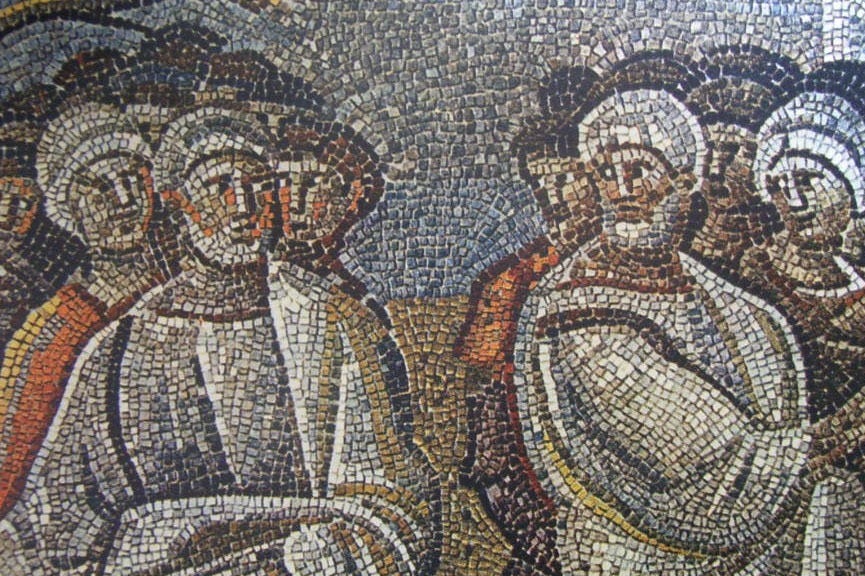
Last week, in parsha Lekh L’kha, we learned that the condition of Abraham’s status as a Jewish patriarch, of his creating a Godly community, is Abraham’s separation from his family of origin. This week, in parsha Va-yera, we learn that there are terrible psychic costs to that condition. Abraham, whom God required to leave his family in Ur in order to create a nation of Jews, winds up repeating that act of familial disruption and separation, not once but three times. First, with Lot. Second, with Ishmael. Last, with Isaac. The consequences are devastating, requiring divine intervention at the last moment to save Isaac. But the damage may be permanent and beyond repair.
Lot, Ishmael, and Isaac are all blood relatives of Abraham. Lot is his nephew, his last link to his family of origin in Ur. Ishmael is his biological son, but not his legitimate heir; Ishmael’s mother is Hagar, Sarah’s Egyptian maidservant. Only Isaac, the son of Abraham and Sarah, is born of both a patriarch and a matriarch, making him the legitimate Jewish heir to Abraham.
Before Ishmael and Isaac are born, Abraham treats Lot as his surrogate son.1 Abraham has kept Lot close through years of wandering and exile; they manage their herds together, and they argue like father and son. As is true of many sons and fathers, Lot is a foil to Abraham. Where Abraham is forever righteous, Lot is quick to anger, hesitant, and falls short with his mitzvot. As is true in many families, little disputes culminate in a major falling out. During an argument over land and herd management that could have been easily resolved, Abraham abruptly severs himself from Lot. You go your way, I’ll go mine.
Saying goodbye to Lot is a tremendous loss, and it is that goodbye that sets in motion the collapse of Lot. It is a literal parting of ways, with Lot journeying eastward to Sodom, a city corrupt with sin, and Abraham remaining in the West, in Canaan. Lot’s journey to and eventual residence in Sodom is a geographic representation of his moral failing.
In Va-yera, God decides to destroy the cities of Sodom and Gomorrah because, like pre-flood societies, they have become irredeemably corrupt. He sends two angels as strangers into Sodom as a test to see if there are any righteous and hospitable people left. Lot, who is now fully settled in Sodom with a wife and four daughters, takes the angels in as the men of Sodom swarm his home with the intention of raping his guests.2
Lot goes to disturbing lengths to achieve the mitzvah of hospitality, offering two of his daughters to the men of Sodom in place of the angels. Lot’s actions could be seen as an attempt to emulate Abraham’s righteous willingness to sacrifice family. Unlike Abraham, he is not rewarded with patriarchal status. God resolves to destroy Sodom, allowing Lot a brief window of time to escape with his family. Lot’s two daughters do not heed their father’s calls to flee and choose to remain in the city. Maybe they did not believe their father after being offered by him to the men of Sodom. Maybe they did believe him, yet still preferred death. The mere fact of their choice to stay suggests Lot’s family is already unraveling.
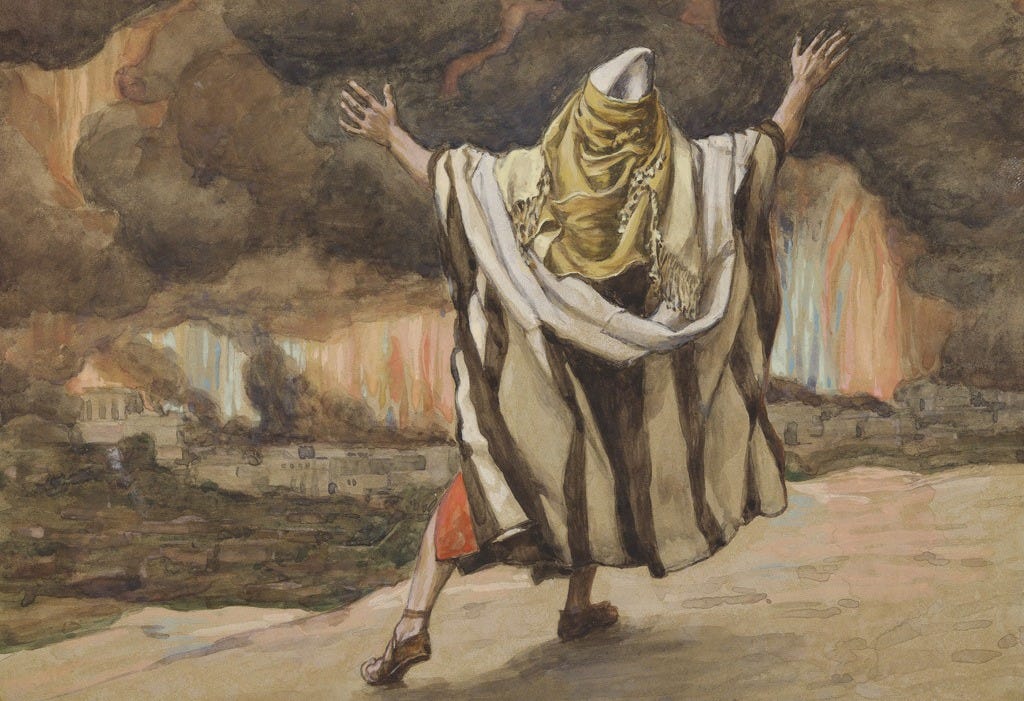
As Lot, his wife, and their two remaining daughters flee, Lot’s wife hesitates. She turns back to face her home, torn between two sets of daughters, and is turned into a pillar of salt. Stricken by fear, Lot takes his remaining daughters to live in a cave. In the cave, Lot’s daughters, believing the whole world has been destroyed and that they alone must repopulate the earth, rape their father. This is the last of Lot’s appearances in the Torah. His story ends in dishonor. It is a fate similar to that of Noah, who, after leaving the ark, drinks himself to unconsciousness and is violated by his own son. Like Lot, Noah, though given a significant task by God, does not go on to become a patriarch, and instead is condemned to a dishonorable end.
It is Abraham’s swiftness to cut off Lot, not the conflict between Abraham and Lot, that catalyzes Lot’s descent into Sodom and into sin. Had Abraham tried to salvage the familial connection, as a surrogate father and moral role model to Lot, he might have saved Lot from Sodom, spared Lot’s family, and prevented Lot’s dishonorable end.
Ishmael is Abraham’s second sacrifice of a son. When Sarah gives birth to Isaac, Sarah sees Ishmael and Hagar as a threat to her family and demands that they be sent away.
Sarah saw the son whom Hagar the Egyptian had borne to Abraham playing. She said to Abraham, “Cast out that slave-woman and her son, for the son of that slave shall not share in the inheritance with my son Isaac.” Genesis 21:9-21:10
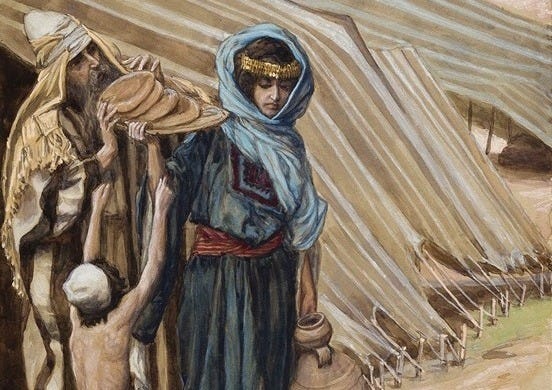
This time, Abraham hesitates to abandon his son. It’s easy to imagine that in that moment, Abraham was painfully reminded of Lot. God misunderstands Abraham’s distress, reassuring him that he need not worry, that Isaac will be the son to continue his lineage. But to Abraham, biology is not a factor in the love of a son. He feels the loss of Ishmael all the same. “The matter distressed Abraham greatly, for it concerned a son of his” (Genesis 21:11). Nevertheless, following God’s advice, he banishes Hagar and Ishmael. The second sacrifice is complete.
We now come to the third sacrifice: Isaac. This time, God calls on Abraham to kill Isaac and offer him as a literal sacrifice. It is the final and most viscerally disturbing test of Abraham’s faith. God commands Abraham: “Take your son, your only one, whom you love, Isaac” (Genesis 22:2).
In the Talmud, the sages thought that Abraham might have been thinking, in this instance, of one of his previous sacrifices. They imagined the following interaction between God and Abraham:
God said to Abraham: “Please take your son, your only, whom you love, Isaac” (Genesis 22:2). When God said: “Your son,” Abraham said: I have two sons. When God said: “Your only,” Abraham said: This son is an only son to his mother, and that son is an only son to his mother. When God said: “Whom you love,” Abraham said: I love both of them. Then God said: “Isaac.” BT Sanh. 89b
As the sages imagine it, Abraham’s confusion reminds God—who, wrapped up in His plans for the Jewish patriarchal line, can only think of Isaac—that he has in fact already sacrificed two sons.
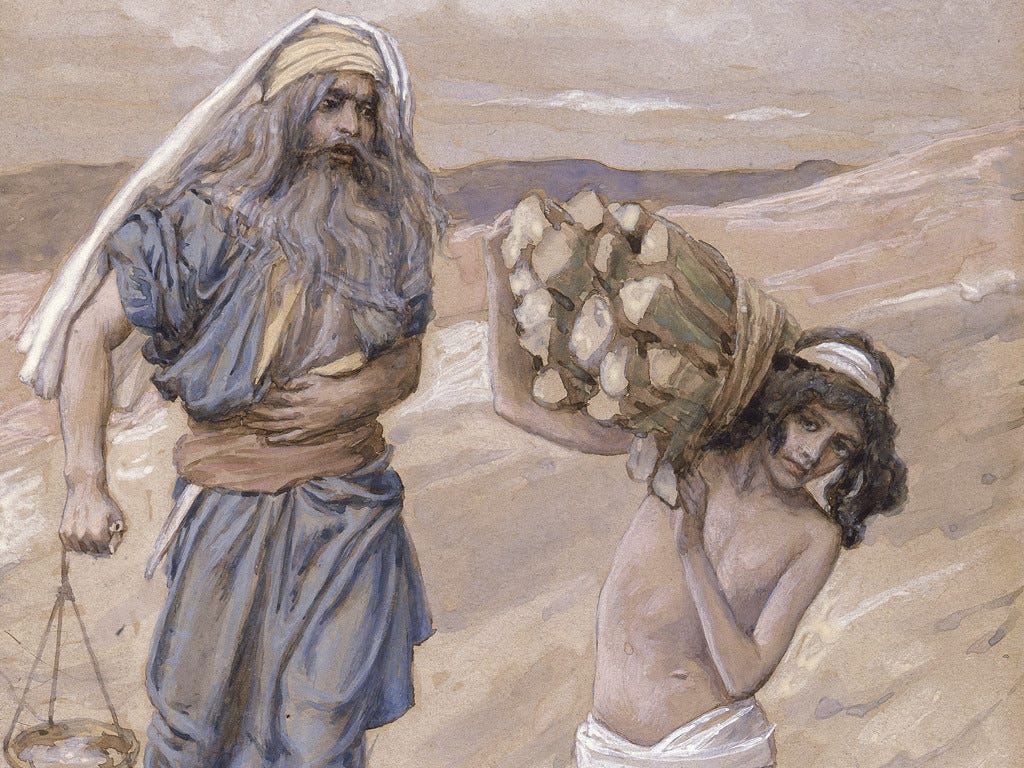
Still, faithful as ever, Abraham prepares to slay Isaac. After God swoops in at the last moment, for the first time preventing Abraham from sacrificing a son, Abraham returns home alone. Never again do the father and son speak to each other. Isaac is nowhere to be found as Abraham selects a wife for him. Abraham fades into the background after Isaac marries, though he goes on to live another thirty-five years. Even at Abraham’s deathbed, as his father wills all his possessions to him, Isaac is not present in the narrative. Despite God’s intervention in the final sacrifice, Abraham has effectively lost his third son.
The three sacrifices arise from a central confusion in God’s efforts to create a Jewish community of blood. From the moment He told Abraham to leave Ur, God has taught Abraham that blood ties are not a prerequisite for family. If the blood ties connecting Abraham to Ur meant nothing, it seems natural for Abraham to conclude that family and inheritance can be more loosely defined. His heir might be his steward, his nephew, or his half-Egyptian son.
The friction between God’s plans for a patriarchy of Jewish blood, on the one hand, and Abraham’s understanding of family, and the fallout of Abraham’s first sacrifice—his departure from Ur—create a multi-generational trauma in multiple families. God’s initial effort to prime Abraham to be a Jewish patriarch is not enough. He must repeatedly test Abraham’s faith, requiring him to sever ties with his family. God ups the ante each time until Abraham is mere seconds away from slaughtering Isaac. Can it be that, when it is already too late to save Abraham’s last connection to his only remaining son, God realizes He has gone too far?
Image: “Parting of Lot and Abraham,” 430 A.D. Sta. Maria Maggiore, Rome.
We know that while Abraham is concerned with lineage and progeny, he is less concerned about blood. Later in Genesis, for example, he says to God, “Since You have granted me no offspring, my steward will be my heir” (Genesis 15:2-15:3).
The number of Lot’s daughters is debated.