
Va-yetzei
Lessons on contract

The events of Va-yetzei, this week’s parsha, are often read as a tale of Jacob’s transformation from a trickster into an honest man. Beginning with sundown and ending with sunrise, the parsha is cited as a period of darkness that Jacob emerges from changed, ready to make amends for the mistakes of Tol’dot, particularly his deception of his brother Esau and his father Isaac. But Va-yetzei is not a redemptive tale for Jacob. Jacob does enter the parsha as a low-level trickster, whose skills are limited to the interpersonal level, but he exits as an evolved strategist whose skills have been honed to an economic level. In his time with his uncle Laban, Jacob learns the art of contract in marriage, labor, and capital, but he does not become more of a moral person.
After Jacob betrays his brother and father in the last parsha, his mother Rebekah sends him to live with her brother Laban in order to escape Esau’s wrath. Before he even meets Laban, Jacob encounters Rachel, Laban’s younger daughter, shepherding her father’s flock at a well. He falls in love with her immediately. Compared to the previous matches and marriages in the Bible, Jacob’s love for Rachel is uniquely romantic. In a world where marital unions are usually economic arrangements between families, Jacob’s feeling for Rachel is a strange case of love at first sight. It is his love for Rachel that drives him to indenture himself to her father for seven years, and it is that same love that allows the seven years to pass Jacob by as though they were only a few days.
It is surprising that the Jacob of Tol’dot, who unfeelingly betrayed his family, is now so feeling that he allows himself to be exploited by Laban. There is no question of Jacob’s love for Rachel, but he doesn’t just fall for Rachel alone. At the well, Jacob is inspired by the sight of both Rachel and the flock of Laban’s sheep that she shepherds:
And when Jacob saw Rachel, the daughter of his uncle Laban, and the flock of his uncle Laban, Jacob went up and rolled the stone off the mouth of the well, and watered the flock of his uncle Laban. Genesis 29:10
Rachel and her father’s flock function as one unit. Together, they portend great opportunity for Jacob—opportunity for love, family, and property. Laban, a seasoned trickster himself, immediately recognizes Jacob’s love and aspirations. He sees them as a point of leverage, and uses them to contract Jacob as a laborer. He asks Jacob to set his own wages. Jacob requests Rachel’s hand in marriage in exchange for seven years of labor.
Although the terms and conditions of Jacob’s labor are set, the details of his work are left undefined. Over time, Laban is able to alter the conditions of Jacob’s contract to extract more labor from him. In a reprise of Jacob’s deception of Isaac, where Jacob pretended to be his brother Esau in order to trick Isaac into giving him his blessing, Laban disguises his older, less attractive, daughter Leah, as Rachel. Jacob is deceived into marrying Leah. Still deeply in love with Rachel, he agrees to work another seven years for Laban in order to secure her hand in marriage. Jacob now concludes his first hard lesson in contracts and exchange: Under the illusion of free decision-making, he has signed away what will turn out to be the next fourteen years of his life.
Now married to the two sisters, Jacob enters the second phase of his education in the world of contracts. Previously, he had to contend with only one opposing player at a time—first, his brother Esau; second, his future father-in-law Laban. Now he must struggle with two players: Rachel and Leah.
Leah is a constant reminder of Laban’s deception of and triumph over Jacob. Leah gives Jacob his first taste of being on the receiving end of trickery. Additionally, each of the wives vies for status in Jacob’s household. Jacob does not love Leah, but Rachel cannot have children. This inequality sets up Rachel and Leah as opposing figures, battling for competitive resources. Within the family, a smaller economy is formed. Leah births four of Jacob’s sons in the hopes that she might earn Jacob’s favor. Rachel, who is barren, becomes envious of Leah and contracts her maid to bear Jacob’s children in her stead, producing two sons. In response, Leah enlists her own maid to do the same, producing two more sons. Rachel promises Jacob to Leah for a night in exchange for mandrakes harvested by one of Leah’s sons. “You are to sleep with me,” Leah says to Jacob afterwards, “for I have hired you with my son’s mandrakes” (Genesis 30:16). In contrast to the romance of Jacob’s first encounter with Rachel, love and sex have become tools of bartering and transaction.
Having navigated the straits of his two wives and emerged with a large family of twelve children, Jacob is ready to enter the third and last phase of his education in contracts. This time he will emerge the winner. He asks Laban for permission to return home. Hoping to repeat the same pattern of trickery from their first contract, Laban tries to extend the bartering process. He again asks Jacob to name his price, and Jacob offers to continue managing Laban’s flock in exchange for a small portion of the flock—the animals with irregular coat patterns. Jacob then selectively breeds the animals that have irregular coat patterns and healthier bodies, creating a special and larger flock for himself. From a small pool of animals, he creates a flock superior to and more numerous than Laban’s. Jacob turns the contract back on Laban. Through this reversal, Jacob has now accumulated a large family and amassed his own capital.
Jacob exits this long period of darkness with a sophisticated handle on contract. His evolution coincides with the evolution of his family, his people, and ultimately, the empire of the Jewish people. He now has not only property but also twelve children who will go on to become tribes in their own right.
Contracts, in theory, are open, consensual, and transparent, the opposite of the world of Esau, which is a world of exploitation, predation, and conquest. But in Va-yetzei, we, like Jacob, realize that contracts can be as Edomite as open exploitation. Through Laban, we learn that contracts can conceal all kinds of things, they can spell out terms with consequences we do not anticipate. In Capital, Marx quotes Engels to this end, writing:
Here [in the workplace] the employer is absolute law-giver; he makes regulations at will, changes and adds to his codex at pleasure; and even if he inserts the craziest stuff, the courts say to the working man: ‘You were your own master, no one forced you to agree to such a contract if you did not wish to; but now, when you have freely entered into it, you must be bound by it.’
At the beginning of the parsha, both Jacob and Laban enter into contract with each other, each thinking that only he knows how to deceive an opponent. In a society built on exchange, however, all secrets and tricks are universalized. Eventually your methods of deception will be turned back on you, as Jacob first discovers with Laban, and Laban ultimately discovers with Jacob.
Jacob’s new, sordid understanding of the contract contrasts with the comparatively crude covenants of Abraham, where nothing is spelled out yet everything is honored, and anticipates the world of Moses, Exodus and Leviticus, where rules, laws, and covenants are spelled out in detail. Va-yetzei is not the transformation of Jacob the trickster into Jacob the good, but Jacob’s—Israel’s—evolution into a knowing political and economic actor.
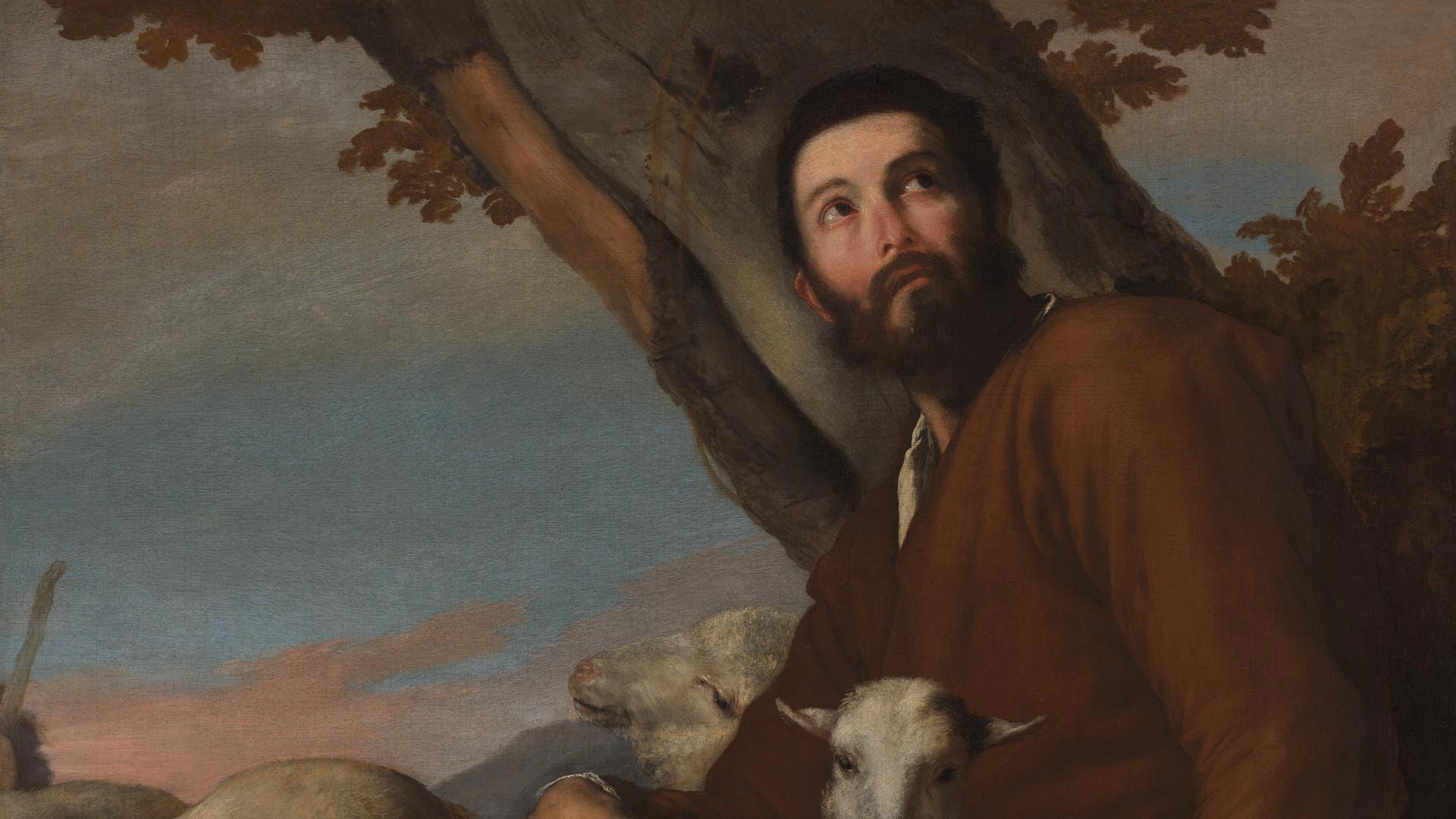
Image: “Jacob with the Flock of Laban” by Jusepe de Ribera